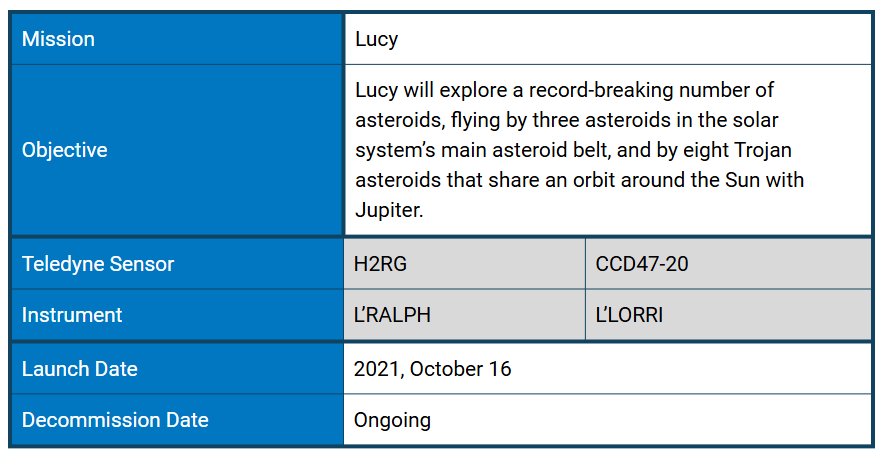
After the formation of the planets in our Solar System, the leftover clusters of rock grains and ices eventually settled into orbit around Jupiter. Known as Trojan asteroids, they are divided into two groups: the Greek camp, orbiting about 60 degrees ahead of Jupiter, and the Trojan camp, orbiting about 60 degrees behind Jupiter. Most Trojan asteroids likely drifted inward from the outer Solar System soon after the formation of the planets, where the combined gravitational influence of the Sun and Jupiter locked them into stable orbits around the so-called Lagrange Points. They are thought to be comparable in number to the objects in the main asteroid belt between Mars and Jupiter.
The Trojan asteroids are among the best-preserved remnants of the Solar System's initial configuration. From Earth- and space-based telescopes, Trojans appear compositionally different from one another. The question remains whether they are materially different or made of the same materials with cosmetic differences caused by environmental factors, such as varying degrees of heating, radiation, and collisions. Comparing their composition will help scientists sharpen their theories on how the planets formed 4.5 billion years ago and reached their current alignment.
Launched in 2021, NASA’s Lucy spacecraft is currently on a 12-year journey as the first mission to visit the Trojan asteroids. While main-belt asteroids have been studied in more detail, scientists have yet to produce in-depth studies on the Trojan asteroids.
For example, scientists would like to better understand how sunlight affects the movement and rotation of Trojan asteroids, and whether it differs from that observed in the main belt. The Sun-facing side of an asteroid continuously absorbs sunlight, while the dark side radiates heat. When the heat escapes, it creates an infinitesimal amount of thrust, pushing the asteroid ever so slightly off its course. Over millions of years, this force, called the Yarkovsky effect, can noticeably alter the trajectory of smaller asteroids (those less than 25 miles, or about 40 km, in diameter).
Similarly, sunlight can also alter the rotation rate of small asteroids. This effect, known as YORP -- named for four scientists whose work contributed to the discovery -- affects asteroids in different ways depending on their size, shape, and other characteristics. Sometimes, YORP causes small bodies to spin faster until they break apart. Other times, it may cause their rotation rates to slow.
Credit: NASA's Goddard Space Flight Center/Scientific Visualization Studio
Initially conceived as a mission to two asteroids, Lucy's original flight path expanded thanks to creative engineering. In 2014, a few years before NASA selected Lucy for flight, NASA engineers were examining a simulation of Lucy’s proposed route through the solar system when they noticed that a particularly interesting asteroid called Patroclus was in the relative vicinity of the flight path. With the assistance of a powerful, open-source software called the Evolutionary Mission Trajectory Generator, they analysed 750,000 known asteroid orbits to select targets with diverse chemical compositions to optimise the mission's data yield. The finalised flight plan for Lucy encompassed eight different asteroids ranging in diameter from about 3 kilometres (2 miles) to 113 kilometres (70 miles). However, that number has increased to 11 asteroids, as observations from Lucy’s scientific instruments have revealed smaller satellites orbiting larger host asteroids.
Lucy is on its way to the Trojans using a trajectory that will bring it past Earth three times for a gravity boost, making it the first spacecraft to return to the vicinity of Earth from the outer solar system.
With a primary mission end date in 2033, Lucy is one of NASA’s longest missions. Thus, mission success will rely not just on spacecraft integrity but also on staff continuity. From planning the mission, submitting proposals, and building the spacecraft, some team members have already worked on Lucy for more than a decade. If Lucy continues on an extended mission, it could fly for many decades. It was decided that mission leads further along in their careers will have younger deputies who can take over if necessary.
The Lucy mission is named for the fossilised skeleton of one of our earliest known hominin ancestors. Just as the discovery of the Lucy skeleton revolutionised the understanding of human evolution, the study of Trojan asteroids shall revamp our understanding of planet formation and solar system evolution.
Lucy LOng Range Reconnaissance Imager (L’LORRI)
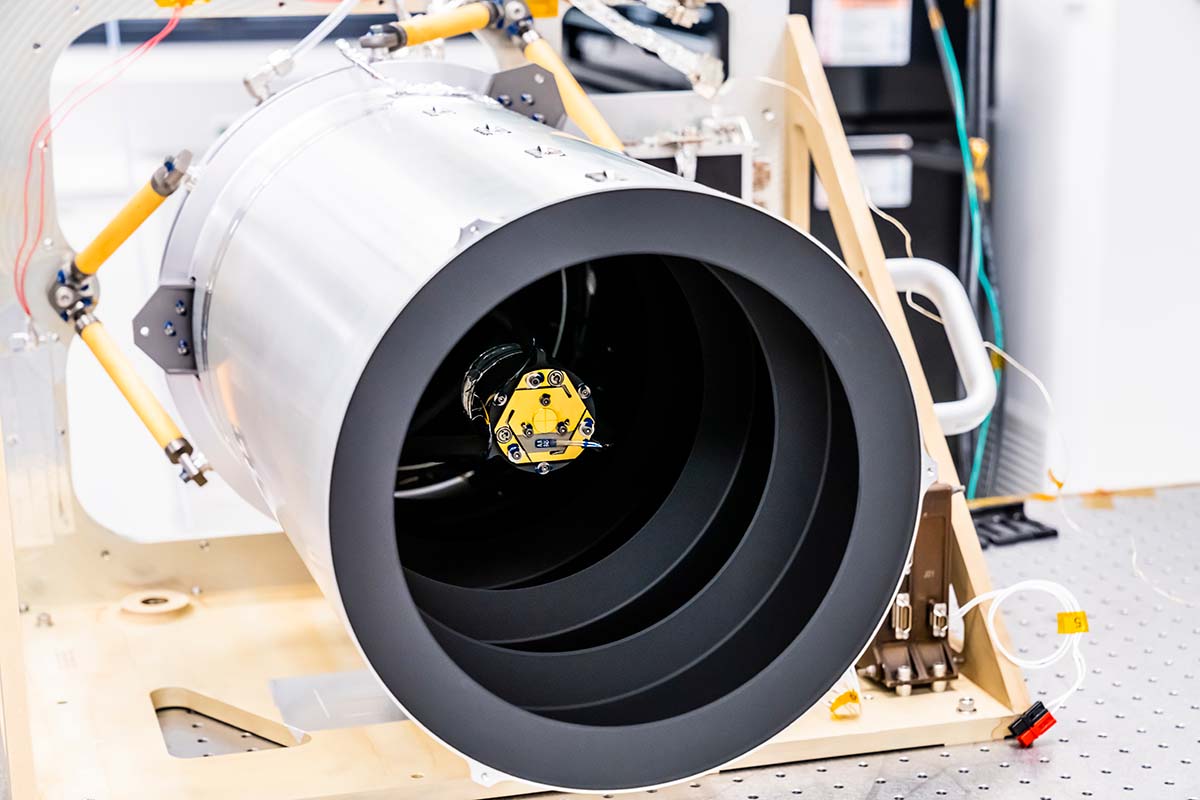 The Lucy LORRI instrument is a high-resolution imager that will help navigate the Lucy spacecraft and capture the first images of the Trojan asteroids, relics that date to the beginning of the solar system. Credit: Johns Hopkins APL
The L’LORRI is Lucy’s most sensitive and highest resolution camera. Containing a Teledyne CCD47-20, L’LORRI’s panchromatic images are helping to understand the surface geology of the Trojan asteroids, including their craters, which record impacts by other asteroids over time. L’LORRI is also searching for rings and satellites, and helping with optical navigation.
Asteroid surfaces offer clues to the environments that the asteroids were exposed to billions of years ago. Many large craters would indicate that the asteroid formed in the turbulent, warmer region closer to the Sun, while fewer craters would imply the Trojan formed in the relatively calm, cold outermost region of the emergent solar system.
One of L’LORRI’s objectives is to produce clear images of the Trojan asteroids, despite them being extremely dark. From 1,000 kilometres (620 miles) away, L’LORRI will be able to clearly see craters with a diameter of 70 meters (229 feet). This is equivalent to 14 meters (45 feet) per resolution element, which is like standing at one end of a football field and seeing a fly at the other.
L’LORRI has no moving parts – not even a focusing mechanism – and does not use optical filters, which reduces risk. Most of L’LORRI’s optical system is made of silicon carbide. The instrument is based on New Horizons’ LORRI instrument, which uses the same CCD47-20 built by Teledyne. Though a few changes were made to New Horizons’ LORRI for the Lucy mission – such as replacing its composite baffle with stronger aluminium, adding a second electronic pathway and more memory – L’LORRI retains much of its predecessor’s tried-and-tested design.
L’Ralph
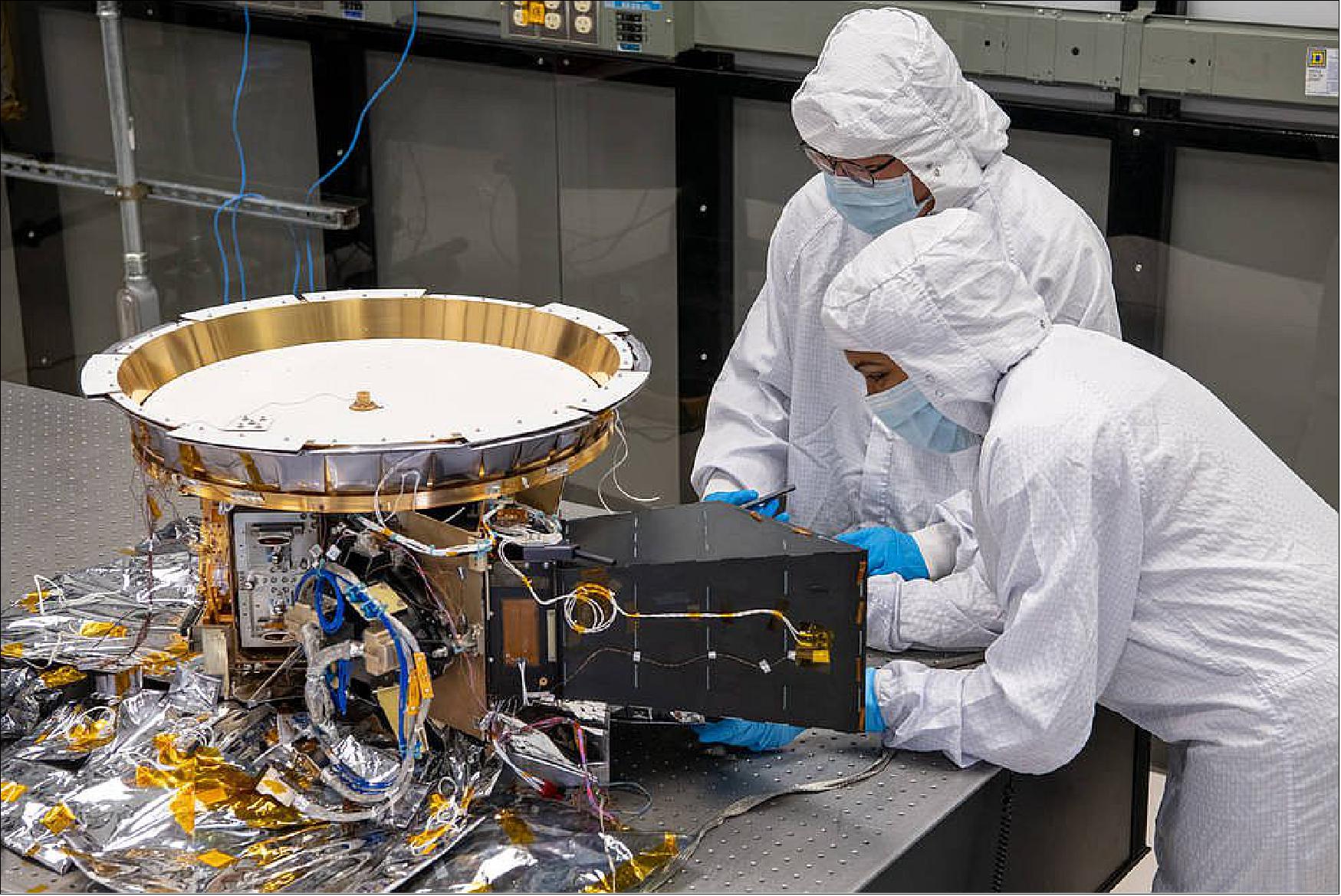 Two engineers work on L'Ralph, the most complicated instrument that will fly on the Lucy mission to Jupiter's Trojan asteroids. It is actually two instruments in one. The Multispectral Visible Imaging Camera (MVIC) will take visible light colour images. The Linear Etalon Imaging Spectral Array (LEISA), will collect infrared spectra. Credit: NASA/Goddard/Barbara Lambert/Desiree Stover
The L’Ralph instrument will search the Trojan asteroids’ surfaces for organic compounds, ices, and hydrated minerals, and its images will help us determine the Trojans’ surface compositions. L’ Ralph is actually two instruments in one — MVIC (Multispectral Visible Imaging Camera), a colour visible imager, and LEISA (Linear Etalon Imaging Spectral Array), an infrared spectrometer. A beam splitter inside sends the infrared light to LEISA and reflects the visible light to MVIC. Specifically, LEISA uses a linear etalon: a thin, slightly sloped, transparent sapphire layer surrounded by a pair of slightly sloped reflective surfaces that separate light into a spectrum, like a prism.
L’Ralph is based on the New Horizons instrument Ralph, as well as OSIRIS-REx’s OVIRS – both of which have Teledyne detectors in them. Lucy’s iteration has a broader IR spectral range, the addition of onboard memory, and a scanning mirror that allows images to be taken without additional spacecraft motion. Despite this, L’Ralph still runs on less than 30 Watts of power, much less power than the average ceiling fan.
L’Ralph will probe the chemical makeup of the nooks and crannies of asteroid surfaces. Deep crater beds, or crater walls, may offer access to the interiors of the asteroids, which are made of younger materials – millions of years old vs. billions of years for the oldest exterior surface. Presumably, these “fresh” surfaces would not have been exposed to as much radiation and micrometeorite impacts, and could preserve some of the asteroid’s original composition.
LEISA images can be analysed based on how different substances on the asteroid’s surface behave when absorbing different wavelengths of light, allowing the identification of the different kinds of rocks, ices, and organic compounds that could be present. From 1000 kilometres (620 miles) away, LEISA will be able to resolve craters on the order of 1,540 feet (500 meters) wide. It contains an H2RG IR FPA developed by Teledyne, tuned to detect IR light from 0.4 - 0.85 µm.
L’Ralph does not have a focusing mechanism. To avoid defocusing or other problems caused by temperature changes, most of L’Ralph is made from a single aluminium block.
Photos of Interstellar Comet 3I/ATLAS
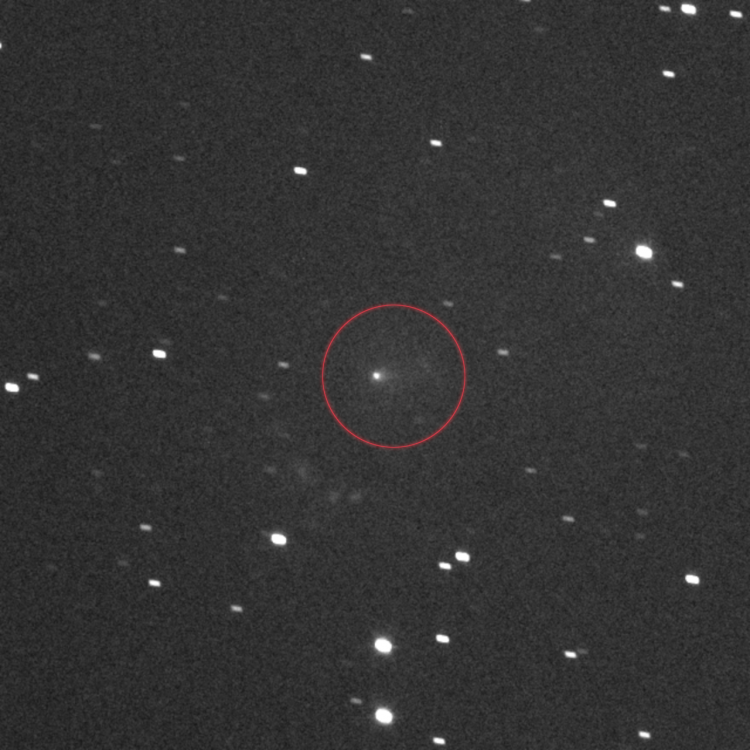
This image of interstellar comet 3I/ATLAS, circled in the centre, was made by stacking a series of images taken by L’LORRI on Sept. 16, 2025, as the comet was zooming toward Mars. Lucy was 240 million miles away from 3I/ATLAS at the time. To obtain these images, Lucy had to point its instruments inward toward the comet and the Sun. The mission’s engineers kept the spacecraft’s components from overheating by carefully orienting Lucy so that its body shielded sensitive instruments. Credit: NASA/Goddard/SwRI/JHU-APL
Comets travel extremely long distances, with some completing orbits well beyond human lifespans. Thus, whenever a comet is detected, astronomers are very interested in using the full range of available tools and resources.
The Lucy team coordinated its observations with astronomers from the Las Cumbres Observatory in Cerro Tololo, Chile. Las Cumbres also employs Teledyne detectors. The observers in Chile were separated from Lucy by 390 million miles and were viewing the comet from different angles. By comparing data from Lucy and Las Cumbres, scientists are working to understand both the comet's three-dimensional structure and how its dust scatters sunlight, a rare opportunity to compare ancient dust from a distant solar system with that from our own.
Credit: NASA’s Goddard Space Flight Centre
Donaldjohanson Flyby
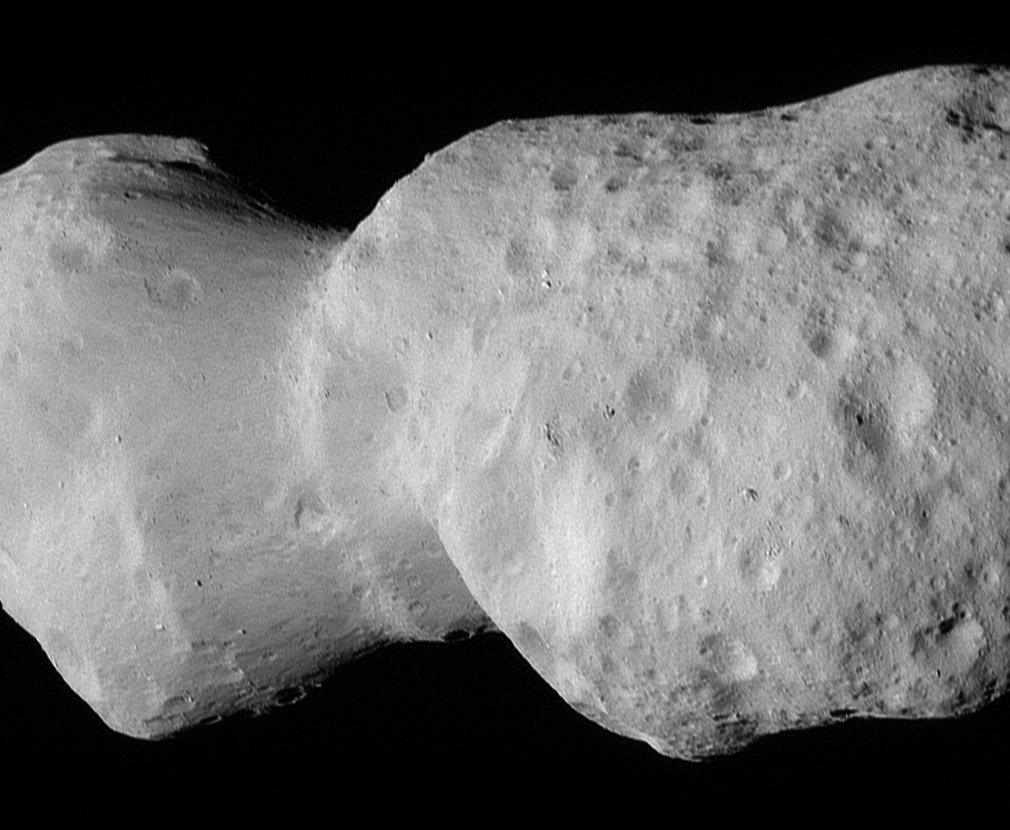
The asteroid Donaldjohanson as seen by L’LORRI. This is one of the most detailed images returned by NASA’s Lucy spacecraft during its flyby. This image was taken at 1:51 p.m. EDT (17:51 UTC), April 20, 2025, near closest approach, from a range of approximately 660 miles (1,100 km). The spacecraft’s closest approach distance was 960 kilometres (600 miles), but the image shown was taken approximately 40 seconds beforehand. The image has been sharpened and processed to enhance contrast. The asteroid looks like two lobes, attached by a thinner cylinder, like a barbell with very large weights. One lobe is smaller than the other. Although they have about the same circumference, the smaller lobe is narrower than the other. The asteroid has a light grey, smooth surface with dimpled, smooth-edged craters. The larger lobe has many more craters. Credit: NASA/Goddard/SwRI/Johns Hopkins APL/NOIRLab
What’s Next For Lucy?
Lucy is currently on its way to visit the first Trojan asteroid, Eurybates. The flybys of main-belt asteroids Dinkinesh and Donaldjohanson resulted in the successful calibration and demonstration of Lucy’s instruments.
After completing its primary mission, Lucy will remain in a stable orbit, potentially enabling it to revisit the Trojan swarms for many thousands, and possibly millions, of years.
Works Cited
NASA. (2021, October 18). NASA’s Lucy Mission: A Journey to the Young Solar System. https://science.nasa.gov/solar-system/planets/jupiter/nasas-lucy-mission-a-journey-to-the-young-solar-system/
NASA. (2025, April 11). The Lucy Spacecraft. https://science.nasa.gov/mission/lucy/spacecraft/
NASA. (2021, October 16). Exploring the Trojan Asteroids. https://science.nasa.gov/blogs/lucy/2021/10/16/exploring-the-trojan-asteroids/
NASA. (2025, November 19). NASA’s Lucy Spacecraft Snaps Photos of Interstellar Comet 3I/ATLAS. https://science.nasa.gov/blogs/lucy/2025/11/19/nasas-lucy-spacecraft-snaps-photos-of-interstellar-comet-3i-atlas/
NASA. (2023, November 7). NASA’s Lucy Surprises Again, Observes 1st-ever Contact Binary Orbiting Asteroid. https://science.nasa.gov/missions/lucy/nasas-lucy-surprises-again-observes-1st-ever-contact-binary-orbiting-asteroid/
Jeremy Rehm. (2020, November 5). Despite Obstacles, Johns Hopkins APL Team Delivers First Instrument for NASA’s Lucy Mission. Johns Hopkins Applied Physics Center. https://www.jhuapl.edu/news/news-releases/201105-APL-delivers-Lucy-LORRI-despite-hurdles
EO Portal. (2021, April 21). Lucy: NASA's mission to Jupiter's Trojans. https://directory.eoportal.org/satellite-missions/lucy#references

