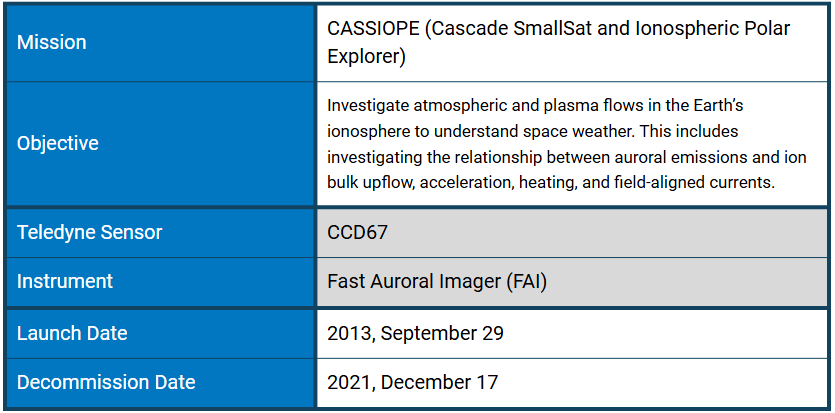
Space weather can have adverse effects on essential technology we use everyday: cell phones, financial transactions, GPS, and the electric grid itself. Solar activity such as coronal holes, sunspots, and CMEs eject particles from the Sun sending them into the Earth’s atmosphere, sometimes causing geomagnetic storms which disrupt electronic signals and satellites. Understanding how the solar wind interacts with the atmosphere, improves our ability to forecast the severity of these far-reaching storms.
Beyond the ozone layer, the Earth’s atmosphere becomes less dense and more ionized, stretching high up through the ionosphere and eventually into the region of space extending well past lunar orbit – the magnetosphere – all the way out to the edge of Earth’s celestial boundary. Carrying energetic particles, solar radiation blows into the ionosphere, creating a shell of charged particles – electrons and ions – called plasma. The escape of plasma from the polar ionosphere towards the magnetosphere is one of the most important processes in the Ionosphere-Thermosphere-Magnetosphere system.

Credit: University of Calgary
Launched in September 2013, CASSIOPE (Cascade SmallSat and Ionospheric Polar Explorer) premiered a Canadian smallsat bus. Designated the MAC 200, the platform is a generic design approach for multimission functionality. The CASSIOPE mission was achieved through a public-private partnership of the Canadian Space Agency (CSA) and Industrial Technologies Office (ITO).
Accordingly, a major component of CASSIOPE’s payload is an auroral imaging instrument package called ePOP (Enhanced Polar Outflow Probe). Designed to conduct remote in-situ high-resolution observations of the energy distribution of ions in the ionosphere, electromagnetic fields, and auroral displays, ePOP is a suite of eight complementary science instruments, including imaging plasma and neutral particle sensors, magnetometers, and radio wave receivers.
CASSIOPE’s ePOP examines the highest layers of the near-Earth atmosphere producing images of dynamic auroral phenomena from space. Fulfilling ePOP’s scientific objectives presented an engineering challenge to improve contemporary technological capabilities by an order of magnitude in terms of temporal and spatial resolution, as well as sensitivity, repetition rate, and dynamic range. Advancements in technology, driven by companies like Teledyne Space Imaging, fulfilled those needs.
Fast Auroral Imager (FAI)
Credit: University of Calgary
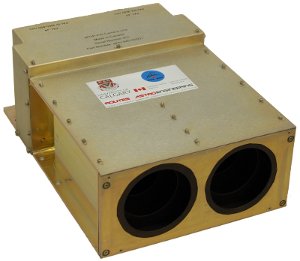
One of the instruments on ePOP is the Fast Auroral Imager, which measures large-scale auroral emissions. Of particular interest are transpolar arcs in the polar cap and enhanced airglow patches that drift from the dayside to the nightside over the polar region. The spatial and temporal characteristics of auroras generated by low and high-energy electrons can be very different, so FAI measures both independently by the use of two identical coaligned cameras with filters optimised for visible or near-infrared spectra.
The VIS camera is optimised for the visible (VIS) .63 μm spectrum to detect the emission of atomic oxygen in aurora and enhanced night airglow. This emission is widely found in the auroral region and polar cap, and it is excited by low-energy electrons. It is very useful for identifying features and boundaries in the atmosphere that correspond to different processes in the magnetosphere. However, because of the relatively long radiative lifetime, it is not a suitable emission to utilise for high temporal and spatial resolution
The NIR camera observes the prompt auroral emissions in the .65 to 1.1 μm near infrared range. The principal emission species in this range, N2, O2 and N+2 , respond preferentially to electrons with energies higher than those for the VIS camera and closely follow the dynamic variations of the precipitating particles.
The cameras have a common 26-degree FOV to provide nighttime images of about 650 km (465 mi) diameter from apogee at 1500 km (930 mi) – a major improvement over the 10s of km resolution for previous auroral imagers. FAI generates 16-bit digital images at a rate of one per second with NIR and two images per minute with VIS.
CASSIOPE’s FAI utilises two of Teledyne Space Imaging's CCD67s: back-illuminated, thinned detectors with high quantum efficiency and low noise. The QE is 0.8 at .63 μm, and 0.66 for the NIR camera, with a read noise of less than 10 electrons. With thermal-electric cooling of the advanced inverted mode operation (AIMO), the dark current can be kept insignificant for normal instrument operating temperatures.
The FAI helped CASSIOPE to achieve its scientific objectives:
Quantify the characteristics of plasma outflow and related micro- and meso-scale plasma processes in the polar ionosphere region encompassing the related wave-particle interaction and ion acceleration – including the small-scale mechanisms for auroral excitation. This helps scientists untangle the relationship between aurora emissions, ion energisation, and bulk upflow.
Explore the occurrence morphology of escaping neutral particles from high latitudes caused by temperature enhancements and non-thermal processes – including the optical signatures of large-scale convection and their relation to radar measurements.
In combination with other instruments in e-POP, investigating the effects of auroral currents on plasma outflow and those of plasma microstructures on radio propagation.
Black Aurora
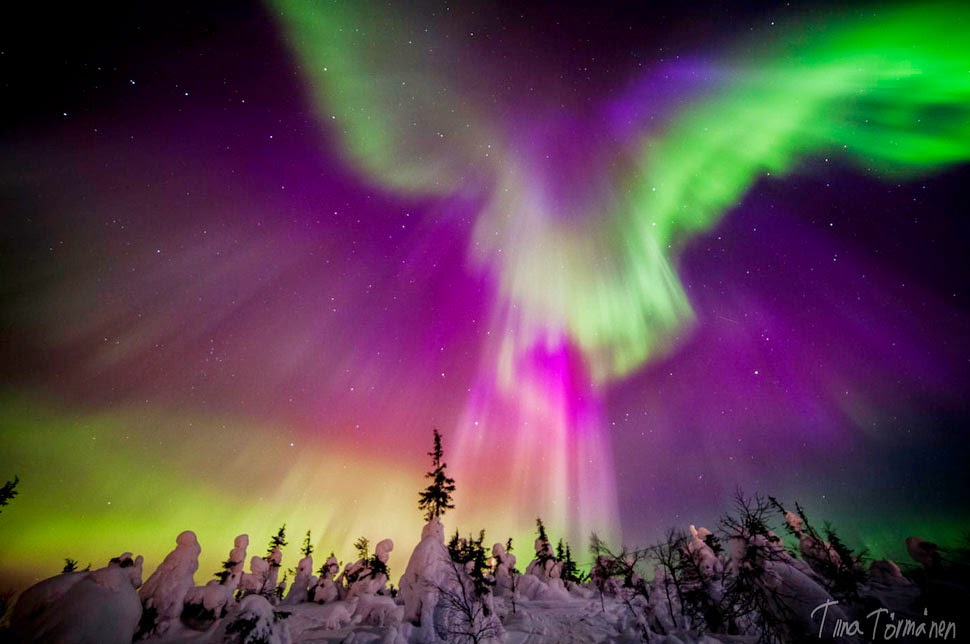 An aurora photographed in Lapland, Finland. Image Credit: Tiina Törmänen
The widely known phenomena of Aurora Borealis and Aurora Australis are luminous displays of green, red, violet, and blue. They are caused by electrons spiraling down from space into the atmosphere within negatively charged structures.
However, there is another phenomenon found nearby – a kind of 'anti-aurora' known as black auroras. Harder to see – yet just as fascinating – black auroras are spectacular voids; dark rings, shadowy curls or black blobs in a sea of faint, glowing aurora. These areas of electrical void present positive potentials that repel electrons back into space, preventing them from interacting with atmospheric gases. During these phenomena, ionic voids act as absorption zones, depriving the surrounding area of the typical illumination of traditional auroras.
Achievements:
In the first statistical study of its kind, scientists observed that extremely low frequency electromagnetic waves – known as BBELF (BroadBand Extremely Low Frequency) – energise heavy oxygen (O+) ions, even at relatively low altitudes, heating them and accelerating them away from Earth. This phenomenon, called transverse ion heating, had long been thought to occur predominantly at higher altitudes. The study also reported downward flowing jets of ionospheric ions, attributed to downward pointing electric fields associated with auroral currents.
Observations during solar storms in the polar regions revealed magnetic Alfvén waves supporting the theory that magnetic waves have a larger influence on the formation of aurora rather than electric fields. These waves may play an important and underappreciated role in transporting energy from near-Earth space to the atmosphere to produce the aurora.
Documented eruptions on the Sun's surface removing electrons across large areas in the Earth’s atmosphere. The composition of the magnetic field undergoes dramatic changes in the area between the solar wind and the Earth's magnetic field. This data increases the understanding of solar storms and can contribute to more reliable communication and navigation in Arctic areas.
CASSIOPE’s Collaboration with ESA’s Swarm
In 2018, CASSIOPE joined ESA’s Swarm mission as Swarm-Echo, bringing together two complementary missions to study the complexities of Earth’s magnetic field and how processes on the sun affect the movement of mass and energy in Earth’s ionosphere.
Synergistic research areas:
Magnetic field: Auroral dynamics, field aligned current; contribute to main field modeling
Ionosphere-Thermosphere (IT): Neutral density variations, plasma irregularities; IT coupling
Magnetosphere-Ionosphere (MI): Electrodynamics of auroral arcs, MI coupling (MIC)
On December 17, 2021, CASSIOPE lost its third reaction wheel – of four – greatly limiting spacecraft maneuverability and stability, thus ending the routine science operations phase of the mission. Contact is still being made with the spacecraft.
Works Cited
Cogger, L., Howarth, A., Andrew Yau, A., White, A., Enno, G., Trondsen, T., Asquin, D., Gordon, B., Marchand, P., Ng, D. (2014, October 22). Fast Auroral Imager (FAI) for the e-POP Mission. Space Sci Rev (2015) 189:15–25. DOI 10.1007/s11214-014-0107-x
E. Underwood. (2018, April 5). How Heavy Oxygen Ions Escape Earth’s Gravity. EOS Science News by AGU. https://eos.org/research-spotlights/how-heavy-oxygen-ions-escape-earths-gravity
eoPortal. (n.d.) CASSIOPE (Cascade SmallSat and Ionospheric Polar Explorer). https://www.eoportal.org/satellite-missions/CASSIOPE
ESA. (2001, October 12). Cluster quartet probes the secrets of the black aurora. https://www.esa.int/Science_Exploration/Space_Science/Cluster/Cluster_quartet_probes_the_secrets_of_the_black_aurora
George Brown. (2024, December 8). Black Aurora: A Mysterious Phenomenon Caused by the Collision of Cosmic and Terrestrial Forces. Meteo Giornale. https://www.meteogiornale.it/eng/2024/12/magazine/black-aurora-a-mysterious-phenomenon-caused-by-the-collision-of-cosmic-and-terrestrial-forces/
Government of Canada, CSA. (2018, February 22). CASSIOPE: Observing space weather with a hybrid satellite. https://www.asc-csa.gc.ca/eng/satellites/CASSIOPE.asp
Shen, Y., Knudsen, D.J., Burchill, J.K., Howarth, A.D., Yau, A.W., Miles, D.M., James H.G., Perry, G.W., Cogger, L. (2018, April). Low-Altitude Ion Heating, Downflowing Ions, and BBELF Waves in the Return Current Region. Journal of Geophysical Research: Space Physics, Volume123, Issue 4. https://doi.org/10.1002/2017JA024955
University of Calgary, Department of Physics and Astronomy. (2023, September 29). CASSIOPE/e-POP Turns 10! https://epop.phys.ucalgary.ca/CASSIOPE-e-pop-turns-10/

