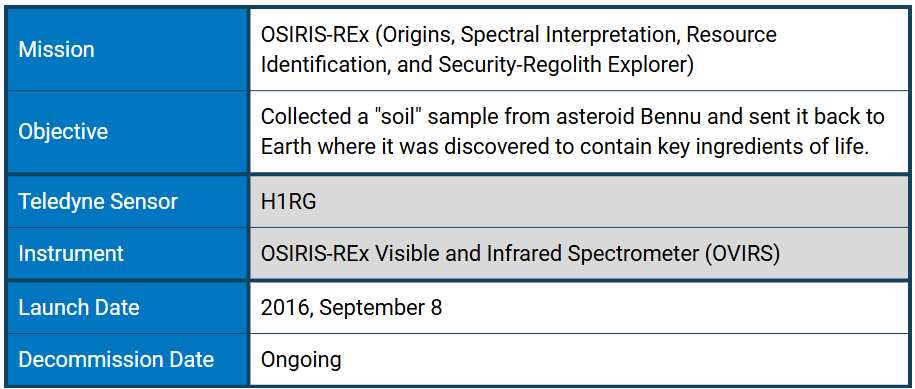
How did the elemental components of life arrive in our Solar System?
Asteroids are essentially debris leftover from the formation of the Sun and planets. Studying them can help scientists understand more about the evolution of the Solar System and the formation of higher molecules from atoms. Unlike the Earth, asteroids have remained unaltered by weather and tectonic activity so their geological composition has barely changed over the millennia.
When meteorites — asteroids that have hit the Earth — have been uncovered on Earth, they have been contaminated by contact with organic compounds on the Earth's surface. In order to accurately track the origins of life, scientists needed to take “soil” –i.e. regolith – directly from an asteroid – a spinning, space rock without enough gravity to support a landing – and bring it back to Earth for comprehensive analysis; all while keeping the sample pristine.
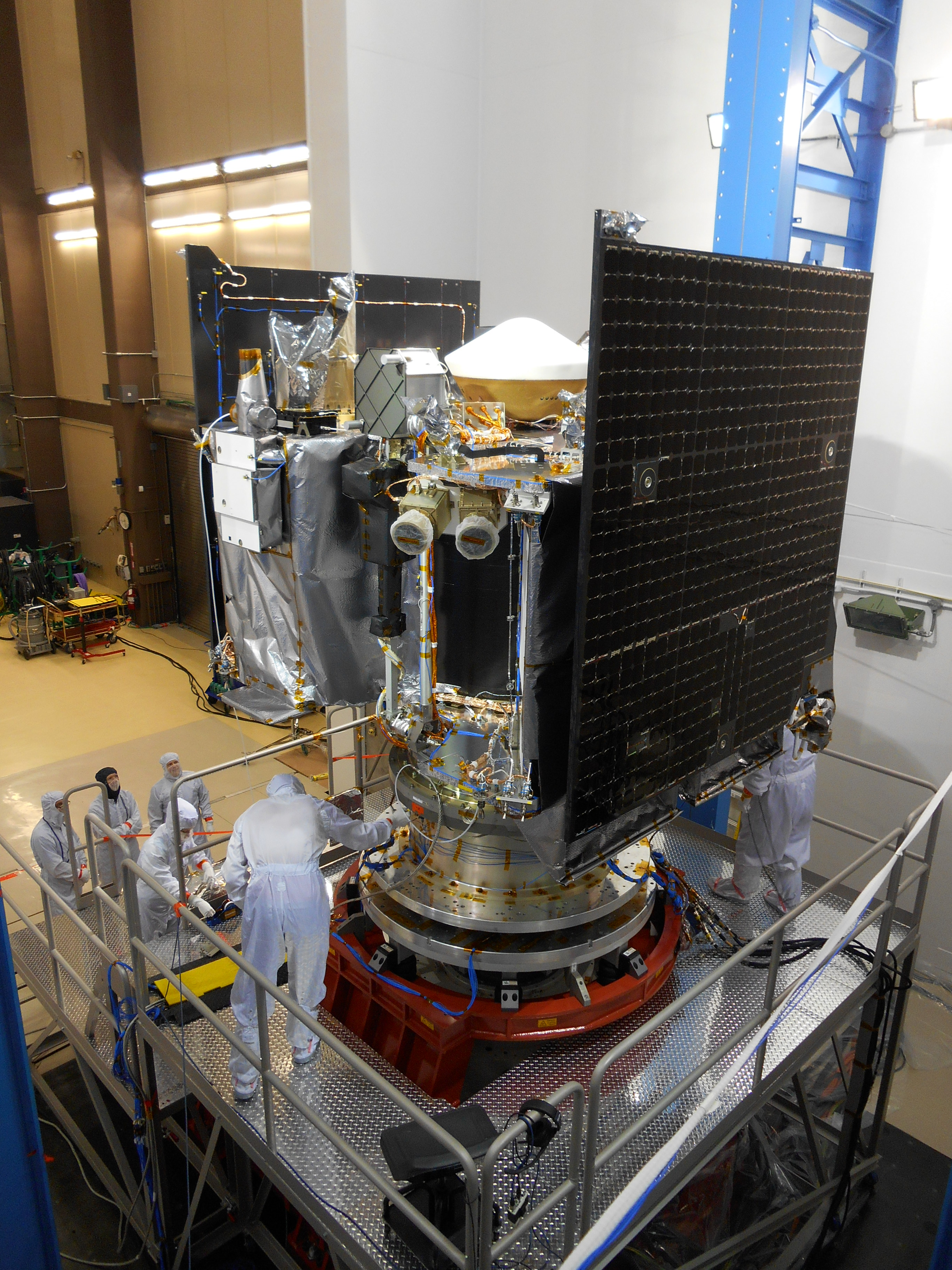 Taken on Nov. 17, 2015, the OSIRIS-REx spacecraft sits on a fixture to undergo further testing at Lockheed Martin’s facility. Credit: Lockheed Martin
OSIRIS-REx (the Origins, Spectral Interpretation, Resource Identification, and Security-Regolith Explorer) is the third mission in NASA’s New Frontiers Program. Managed by NASA’s Marshall Space Flight Center, the spacecraft travelled for two years before arriving at the near-Earth asteroid named Bennu. After maneuvering into orbit, the space probe broke the record for the closest orbit of a small body with a radius of 1 km (0.62 mi). This also earned Bennu the distinction of the smallest body a spacecraft has ever orbited at a diameter of 500 metres (1,640 feet).
OSIRIS-REx successfully collected a sample of rocks and dust from Bennu's surface in October 2020 and returned the asteroid sample to Earth in September 2023.
Why Bennu?
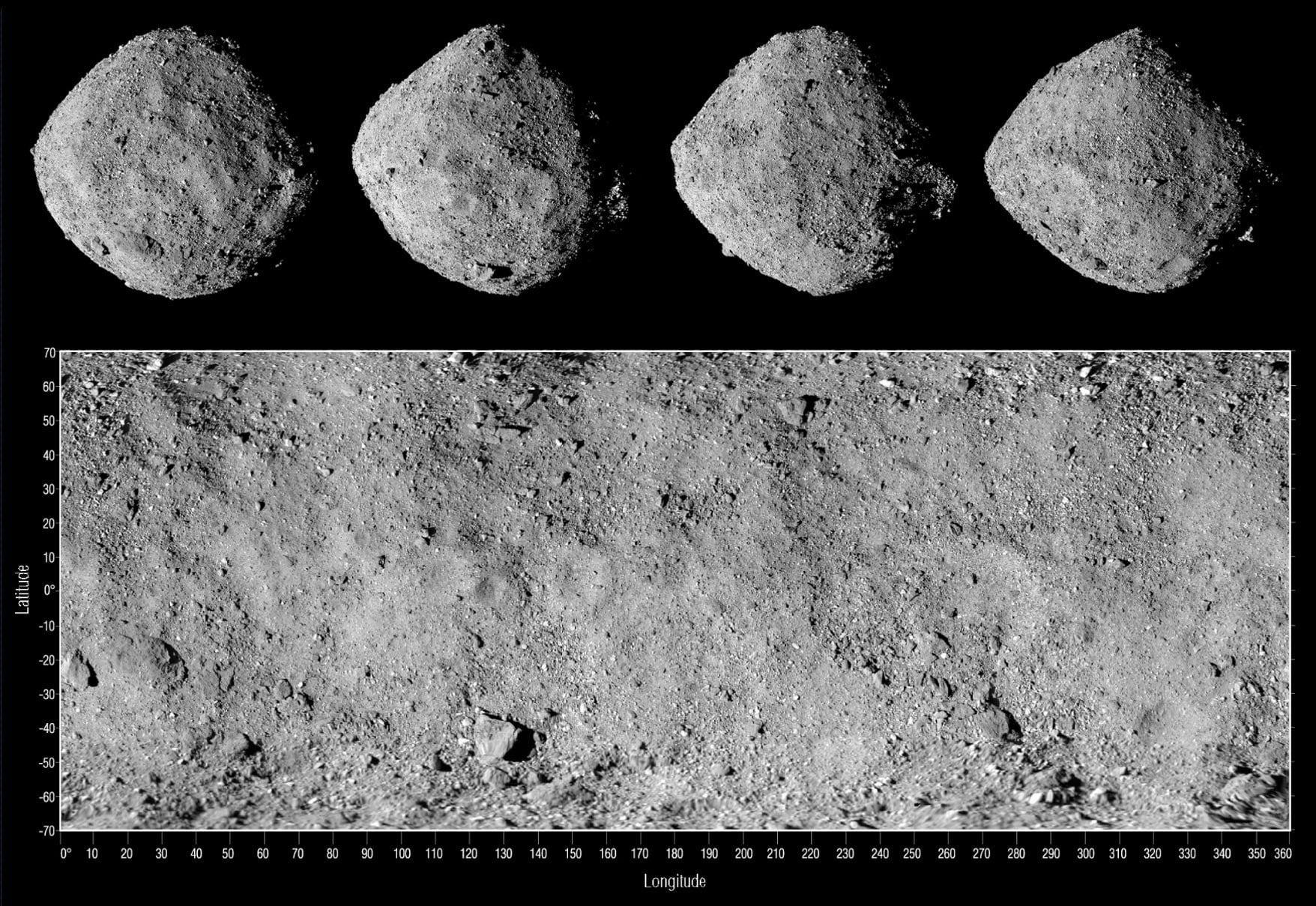 This image shows four views of asteroid Bennu along with a corresponding global mosaic. Credit: NASA/Goddard/University of Arizona
Weighing 77.5 million metric tons (85.5 million-tons) Bennu is an amalgamation of rocks loosely packed and barely held together by gravity or other forces. Classified as a C-type – or carbonaceous – asteroid, Bennu is relatively rich in carbon-based material and likely formed from pieces of a larger object that coalesced after a catastrophic collision less than 2 billion years ago.
Most asteroids can be found in the asteroid belt circling the Sun between the orbits of Mars and Jupiter. This far distance would make for a long and more expensive round trip. Unlike most of the asteroids found in the asteroid belt, Bennu crosses Earth’s orbit, so it was easier and quicker to send a spacecraft to Bennu and back. Bennu is also the right size: asteroids smaller than 200 metres (650 feet) spin too rapidly for a spacecraft to safely land on them.
9-year-old Michael Puzio won the competition to name OSIRIS-REx's target asteroid –designated 1999RQ36– naming it Bennu, after a deity from ancient Egyptian mythology. Bennu was a large heron and the living symbol of Osiris – the Egyptian god associated with the afterlife. With solar panel wings and a slender, robotic, sample-collection arm, OSIRIS-REx indeed resembled a heron.
Music: "Event Horizon" by Jochen Reinhold Flach, via Universal Production Music. Video credit: NASA's Goddard Space Flight Center
For nearly two years, OSIRIS-REx mapped the asteroid in detail, taking side-by-side photos of the surface that were later stitched into stereoscopic images by a team who included Sir Brian May, who completed his PhD in astrophysics 30 years after leaving university to focus on his rock-band Queen. Those images gave scientists the best view of what would make for a safe and scientifically valuable landing site.
One of the biggest, unexpected challenges was that Bennu’s surface is littered with hazardous boulders instead of the smooth, sandy beach expected from observations made by Earth – and space-based telescopes. When scientists received the first images of Bennu, they noted some areas where the resolution was not high enough to see whether there were small rocks or fine regolith. By applying machine learning algorithms to infrared thermal emission data, the OSIRIS-REx team could differentiate regolith from rock. The thermal emission from fine regolith is different from that of larger rocks, because the former is controlled by the size of its particles, while the latter is controlled by rock porosity.
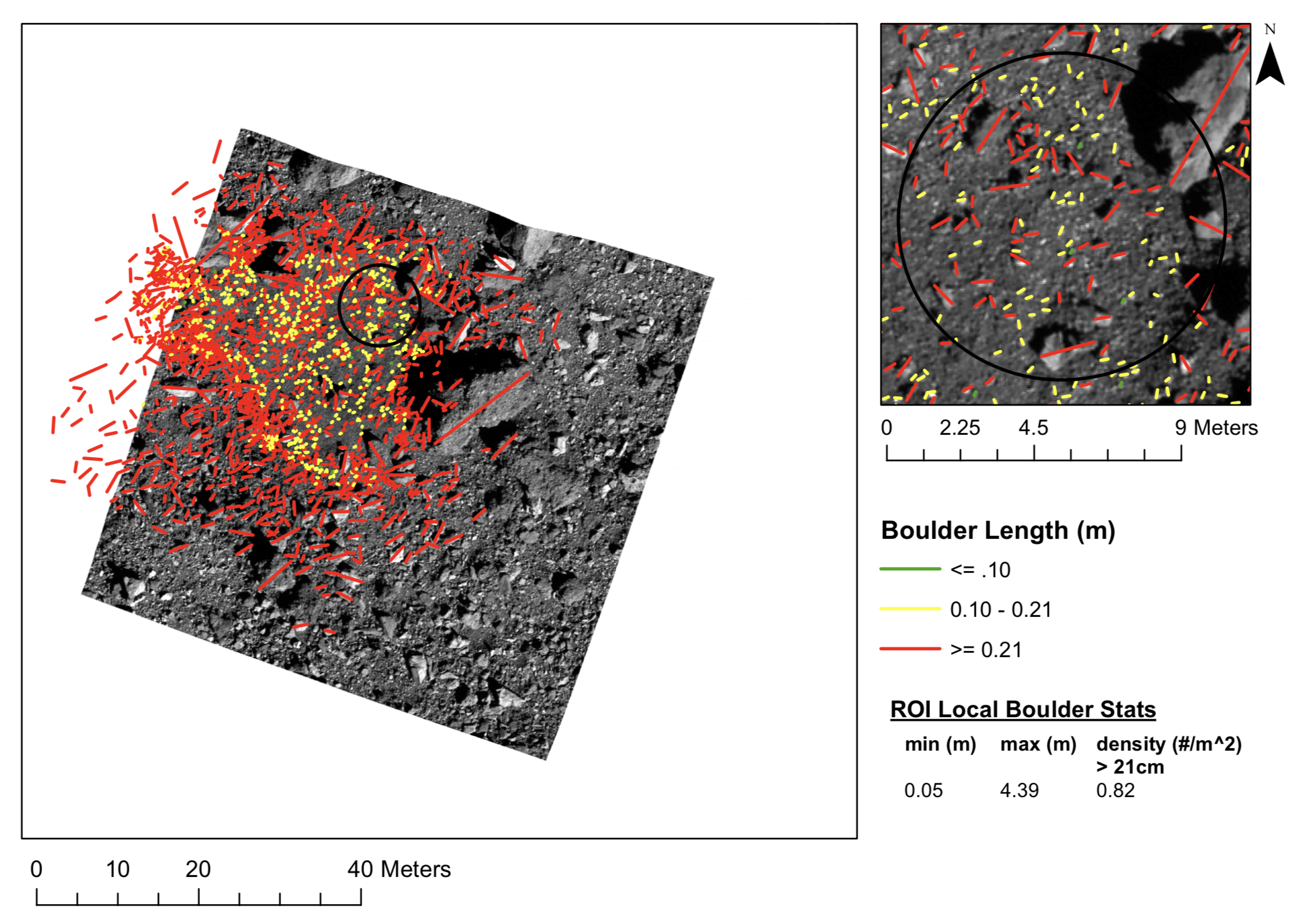 This Boulder Map for site Nightingale details the number and location of boulders present within the region. The boulders are counted by the human eye, using a single image at a time. The boulder counter marks each boulder by the longest axis (point to point) in order to calculate maximum boulder size. Rocks that are 10-21 cm are marked in yellow. Anything larger than 21 cm is marked in red. Rocks and debris that are ingested by the spacecraft’s Touch-and-Go Sample Mechanism (TAGSAM) head could be no more than 2.5 cm wide. Credit: NASA/Goddard/University of Arizona
Large swaths of fine regolith should be uncommon on carbonaceous asteroids, which are the most common of all asteroid types and are thought to have high-porosity rocks like Bennu. In contrast, terrains rich in fine regolith should be common on S-type asteroids, which are the second-most common group in the solar system, and are thought to have denser, less porous rocks than carbonaceous asteroids. Highly porous rocks produce very little, fine regolith because the voids contained in them cushion the blow from incoming meteors, compressing rather than fragmenting.
The Japanese Aerospace Exploration Agency's Hayabusa 2 mission to Ryugu, a C-type asteroid like Bennu, found that Ryugu also lacks fine regolith and has highly porous rocks. Conversely, JAXA's Hayabusa mission to the asteroid Itokawa in 2005 revealed abundant fine regolith on the surface of Itokawa, an S-type asteroid with rocks of a different composition than Bennu and Ryugu. Further analysis revealed that Itokawa's rocks are also less porous than those found on Bennu and Ryugu.
OSIRIS-REx was built to navigate the collection process within an area on Bennu roughly the size of a 100-space parking lot. However, because of numerous boulders, the safe sampling site was reduced to roughly the size of five parking spaces. The spacecraft also had to collect its sample without guidance from Earth, since it takes nearly 20 minutes for signals to travel between our planet and Bennu at the speed of light. The entire touch-and-go collection process took almost 5 hours.
Bennu barely has any gravity, so the probe couldn't land. OSIRIS-REx had to match Bennu’s 4-hour rotation rate and slowly descend to the surface. In October 2020, OSIRIS-REx collected a sample with a cylindrical device called TAGSAM at the end of its sample arm. Upon touching the asteroid, TAGSAM fired a blast of nitrogen gas into the surface, stirring rocks and soil into a small collection chamber. The operation was so successful at grabbing samples that a Mylar flap on the collection chamber was jammed open by all the asteroid material. This prompted the OSIRIS-Rex team to skip weighing the sample and secure it within the return capsule, lest the asteroid sample stream away like a comet. In total, 121.6 g (4.29 oz) of asteroidal material was recovered from the sample container.
Scientists were surprised at how little resistance the asteroid surface provided.
The spacecraft would have sunk into Bennu had it not fired its thrusters to back away immediately after it grabbed dust and rock from the asteroid’s surface. The collector head sank 48.8 cm (1.6 feet), and left a crater 8 meters (26 feet) wide. The mission team decided to send the spacecraft back to take more photographs of Bennu’s surface. This data revealed that the particles making up Bennu’s exterior are so loosely packed and lightly bound, as OSIRIS-REx touched the asteroid it experienced a fraction of resistance equivalent to pressing the plunger on a French press coffee carafe.
This precise information about Bennu’s surface can help scientists better interpret remote observations of other asteroids, which could be useful in designing future asteroid missions and for developing methods to protect Earth from asteroid collisions. Scientists also discovered that Bennu was spitting particles of rock into space, which could affect navigation and spacecraft integrity. Furthermore, it’s possible that asteroids like Bennu — barely held together by gravity or electrostatic force — could break apart in Earth’s atmosphere and thus pose a different type of hazard than solid asteroids.
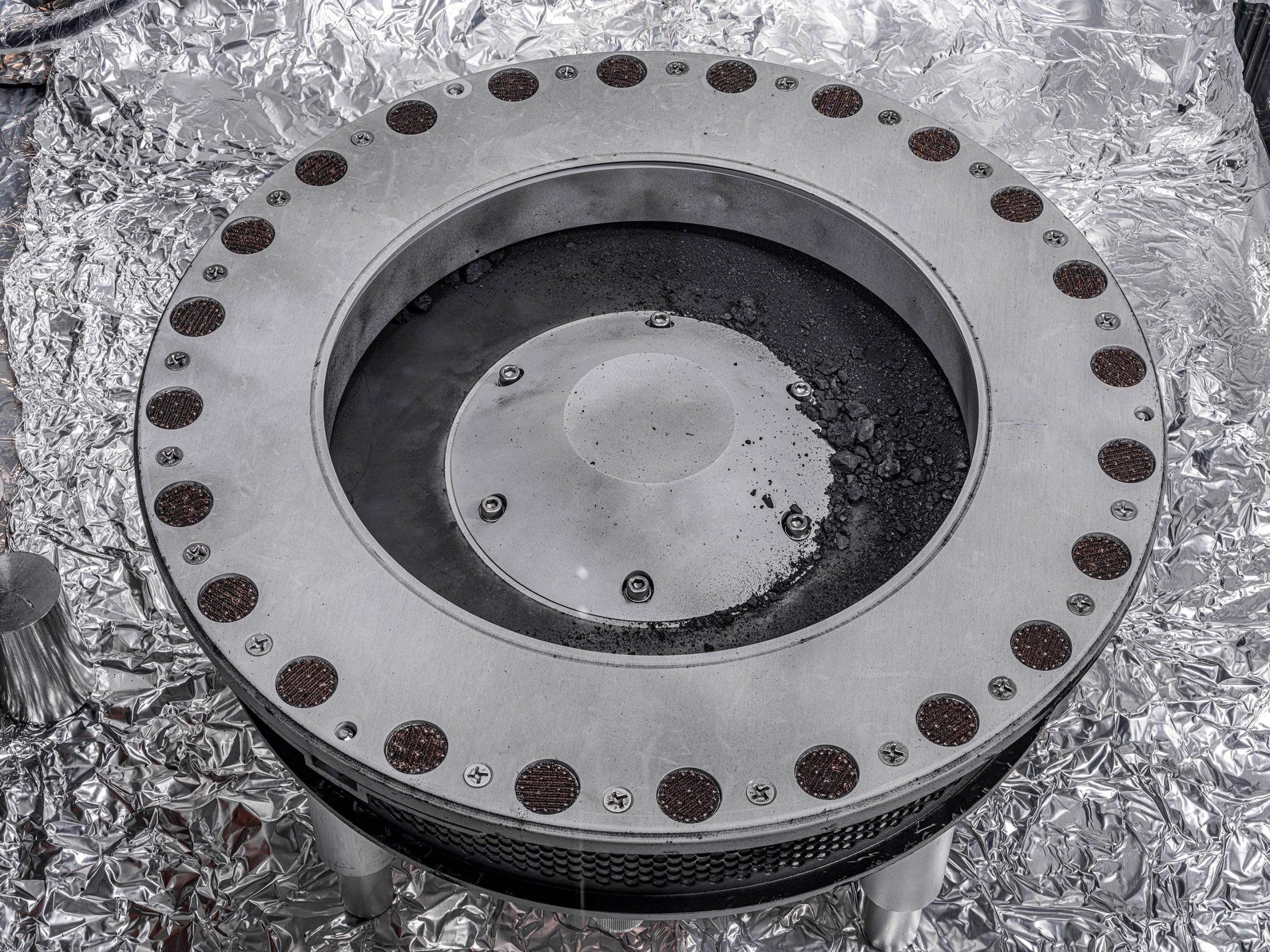 A view of the outside of the OSIRIS-REx sample collector. Sample material from asteroid Bennu can be seen on the middle right. Scientists have found evidence of both carbon and water in initial analysis of this material. The bulk of the sample is located inside. Credit: NASA/Erika Blumenfeld & Joseph Aebersold
Protecting Earth from Catastrophic Asteroid Collisions
If Bennu were to slam into Earth, the estimated kinetic energy released would be 1,200 megatons. While not an extinction level event, the damage would be catastrophic to the local area. Though the odds for such a collision are unlikely – projected to the highest possible accuracy of 1 in 2,700 – the reality is that asteroids can change course.
As the Sun heats an asteroid, the slight heating expansion and subsequent cooling compression provides a tiny push that – over the course of long periods – can alter the orbit, potentially pushing an asteroid towards Earth. Known as the Yarkovsky effect, this phenomenon can be challenging to study, as it varies based on the shape of each asteroid. Quantifying the Yarkovsky effect is crucial to identifying and predicting which asteroids are potentially hazardous.
In fact, to land the spacecraft on Bennu, OSIRIS-REx's scientists made the most precise measurement of the effect yet.
OSIRIS-REx Visible and Infrared Spectrometer (OVIRS)
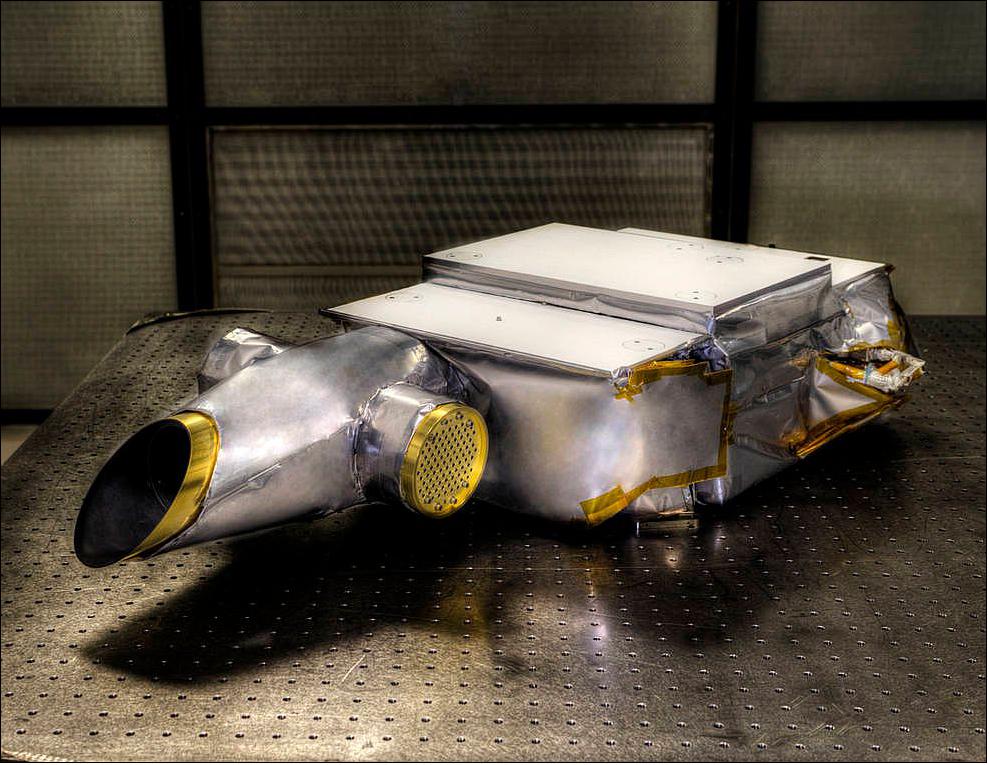 Photo of the OVIRS instrument (image credit: BATC, Ref. 18)
OVIRS is a linear-variable point spectrometer (4 mrad FOV) with a spectral range of 0.4 – 4.3 µm. Measuring visible and near-infrared light, OVIRS hunted for organics and other minerals. It provided full-disk Bennu spectral data, global spectral maps (20 m resolution), and local spectral information of the sample site (0.08 – 2 m resolution). OVIRS spectra was used to identify volatile - and organic - rich regions of Bennu’s surface and guide sample-site selection.
The instrument uses an OAP – Off-Axis Parabolic – mirror to image the surface of the asteroid onto a field stop. The field stop selects a 4 mrad angular region of the image. The light from this 4 mrad area passes to a second OAP that recollimates it and illuminates the FPA. Because the beam speed is low (~ f/50) this assembly, consisting of the array with the filter mounted in close proximity to it, is effectively at a pupil. Each detector element of the array “sees” the same spatial region of the asteroid but different columns of the array “see” it at different wavelengths. The complete spectrum of the 4 mrad spot is obtained in a single measurement. This is somewhat different than the case for some wedged filter spectral imagers, such as LEISA, where the spectrum of a given point is built up over several frames.
In order to obtain the high SNR required for OVIRS on a very dark asteroid surface (albedo ~3%), at least 30 pixels will be averaged in each wavelength column.
OVIRS uses a 510 x 512 pixel region of a 1024 x 1024 H1RG HgCdTe detector array produced by Teledyne. H1RG arrays are constructed by hybridizing – via Indium bump bonds – a photosensitive HgCdTe detector layer to a CMOS Read Out Integrated Circuit (ROlC). OVIRS employs the array packaging configuration developed for the OCO mission and the 4.2 µm-cutoff photosensitive wafer flying on the WISE mission. A cutoff of 4.2 µm means that the sensitivity at 4.2 µm is 50% of the maximum sensitivity. The sensitivity falls roughly linearly from near maximum at 4 µm to near 0 at - 4.4 µm, allowing the 4.2 µm cutoff array to be used for spectral measurements at 4.3 µm. To allow photon sensitivity across a wide full spectrum, the array substrate was removed. The substrate removal also reduces the effect of spurious signals from cosmic rays.
Signs of Life
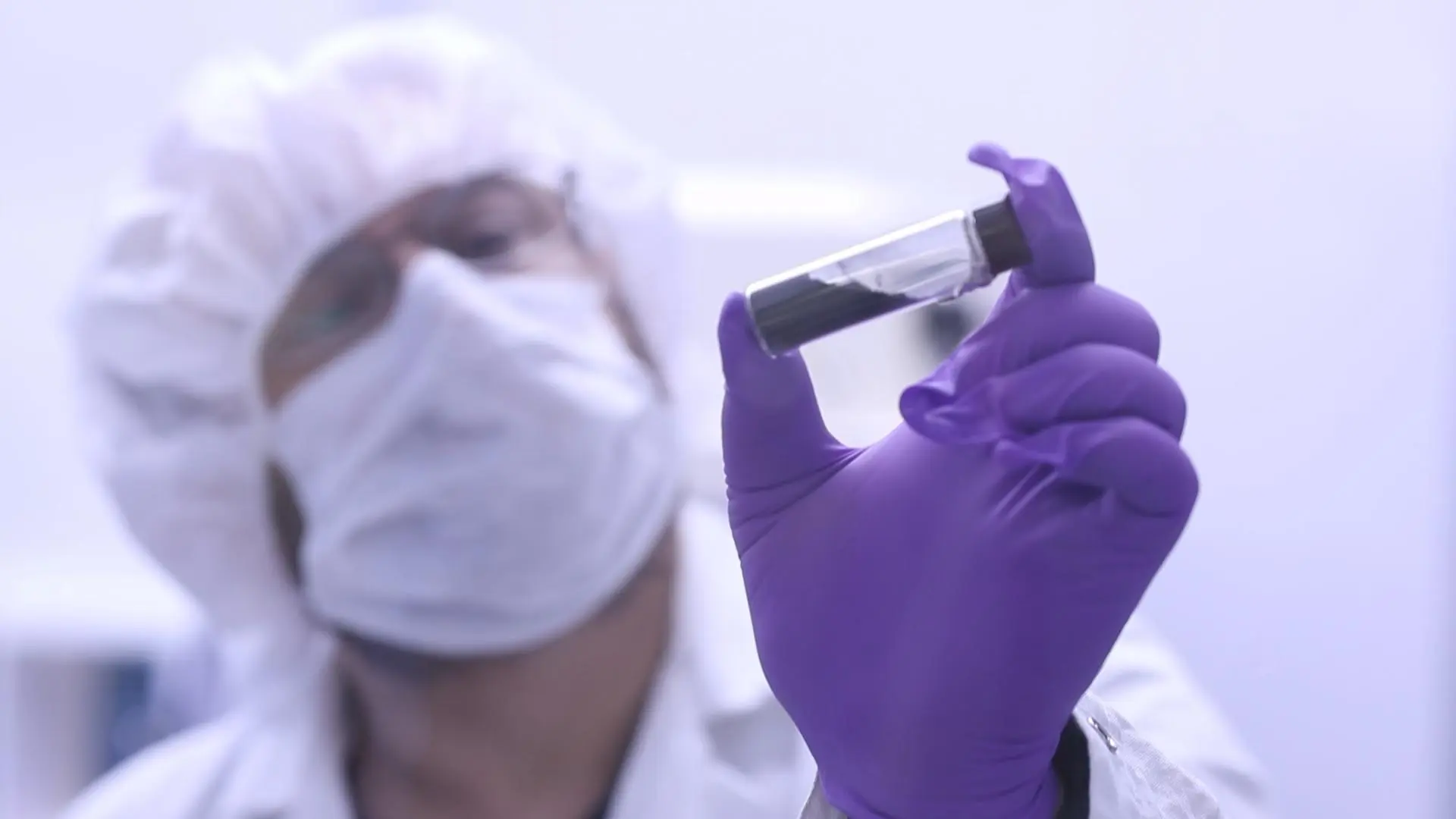 In this video frame, Jason Dworkin holds up a vial that contains part of the sample from asteroid Bennu delivered to Earth by NASA’s OSIRIS-REx mission in 2023. Dworkin is the mission’s project scientist at NASA’s Goddard Space Flight Center in Greenbelt, Maryland. Credit: NASA/James Tralie
The Bennu samples were found to contain water, amino acids, and nucleobases — key ingredients for life as we know it, as well as sodium-rich minerals associated with the evaporation of water, implying that Bennu's ancestor had both the ingredients and physical conditions to catalyze the chemistry of life. Results also imply that these building blocks of biological molecules were widespread throughout the solar system.
Bennu is made of fragments from a larger parent asteroid destroyed by a collision in the main asteroid belt. Lab analysis has shown that some of the materials in the parent asteroid, despite very low odds, escaped various chemical processes driven by heat and water and even survived the extremely energetic collision that broke it apart and formed Bennu. Scientists found stardust grains with compositions that predate the solar system, organic matter that likely formed in interstellar space, and high temperature minerals that formed closer to the Sun. All of these constituents were transported great distances to the region that Bennu’s parent asteroid formed.
Bennu’s molecular composition suggests the ice and organic compounds in its parent body originated in the extremely cold outermost disk of gas and dust that gave rise to the solar system. Temperatures in the outer disk could dip to minus 400 degrees Fahrenheit, allowing volatile gases that easily evaporate in warmer conditions to accumulate and freeze – among them water vapor, carbon dioxide, methane and ammonia, which was detected in exceptionally high abundances in the Bennu samples.
Given the right environment, ammonia will react with formaldehyde to form complex molecules including amino acids. When amino acids link up into long chains, they make proteins, which power nearly every biological function. Fourteen of the 20 amino acids used by life on Earth were found in the Bennu sample. Furthermore, scientists found all five nucleobases that life on Earth uses to store and transmit genetic instructions in more complex terrestrial biomolecules, such as DNA and RNA, including how to arrange amino acids into proteins.
Other essential elements of life were found on Bennu as well: the five-carbon sugar ribose and, for the first time in an extraterrestrial sample, six-carbon glucose. Glucose is one of the most common forms of energy used by life on Earth. This presents the first evidence that an important energy source was also present in the early solar system.
Ribose is a key building block of RNA which performs numerous functions that make life possible. Ribose had previously been found in two meteorites recovered on Earth. Importantly, the Bennu samples did not contain deoxyribose that is essential to DNA: the primary carrier of genetic information in cells.
If Bennu is any indication, this means ribose may have been more common than deoxyribose in environments of the early solar system. Researchers think the presence of ribose and lack of deoxyribose supports the “RNA world” hypothesis, where the first forms of life relied on RNA as the primary molecule to store information and to drive chemical reactions necessary for survival.
Ranging from calcite to halite and sylvite, scientists identified 11 minerals that comprise a complete set of “evaporites” from a brine, or salt-saturated water. These evaporites form as water containing dissolved salts evaporates over long periods of time, leaving behind the salts as solid crystals.
While several evaporites have been documented from meteorite samples, the Bennu sample represents the first time researchers have seen a complete set preserving an evaporation process that could have lasted thousands of years or more. This process happens in basins of water on Earth, including drying lakes and shallow seas. On Bennu’s ancestor, water could have existed in underground pockets or veins, but not on the surface, as it would have quickly boiled away due to lack of atmospheric pressure.
Finding evaporites indicates that the interior of Bennu’s ancestor was warm enough to support liquid water for a substantial amount of time. The water came from the eventual melting of accumulated ice on the asteroid itself. Liquid water is necessary for life, as it facilitates chemical reactions, and salts can prevent water from freezing. Salts also help concentrate simple molecules, making it easier for them to combine into the complex compounds life depends on.
Similar brines have been detected or suggested across the solar system, including at the dwarf planet Ceres and Saturn’s moon Enceladus. Other building blocks for life detected in the Bennu samples have been previously found before on other extraterrestrial rocks. However, identifying them in a pristine sample collected in space supports the idea that objects that formed far from the Sun could have been an important source of the raw precursor ingredients for life throughout the solar system. There is evidence that asteroids like Bennu delivered these compounds to Earth when they smashed into our planet billions of years ago when the conditions for life were starting to emerge.
Some of these building blocks were recently found on the asteroid Ryugu by Hayabusa2, which returned to Earth with its sample in 2020. The chemical and atomic similarities of samples from Bennu, Ryugu, and the most chemically primitive meteorites collected on Earth, suggest their parent asteroids may have formed in a similar, distant region of the early solar system. Yet the differences from Ryugu and meteorites that were seen in the Bennu samples may indicate that this region changed over time or did not mix as well as some scientists have thought.
The Discovery of a Mystery, Gum-Like Polymer
Scientists made a surprising discovery, finding a gum-like material in the Bennu samples never seen before in space rocks. Once soft and flexible, but since hardened, this ancient “space gum” consists of polymer-like materials extremely rich in nitrogen and oxygen.
After Bennu formed, the heat from the sun warmed the asteroid causing the formation of a compound called carbamate created through a process involving ammonia and carbon dioxide. Carbamate is water soluble, but it survived long enough to polymerize, reacting with itself and other molecules to form larger and more complex chains impervious to water. This suggests that it formed before the parent body warmed enough to become a watery environment.
Chemical analysis revealed the same kinds of chemical groups that occur in polyurethane on Earth making this material a form of ‘space plastic.’ Importantly, the mysterious gum has a more heterogeneous composition than polyurethane. It could be one of the earliest alterations of materials that formed on this asteroid in the early days of the solar system.
What’s Next for OSIRIS-REx?
Up to a quarter of the sample was distributed to 233 scientists on the OSIRIS-REx team, which represents 38 institutions globally. 4% was given to the CSA (Canadian Space Agency), and 0.5% was delivered to JAXA (Japan Aerospace Exploration Agency) in mutual exchange for the asteroid Ryugu sample JAXA gave to NASA. The rest, about 70%, will be preserved at NASA for scientists outside the mission team and for future generations of scientists.
After dropping off the sample collection capsule with the material from Bennu, OSIRIS-REx diverted away from Earth. Its eventual goal is the potentially hazardous S-type asteroid Apophis. On April 13, 2029, Apophis will pass closer to Earth than some geostationary satellites, at a distance of 30,600 kilometers (19,000 miles) from Earth. OSIRIS-REx will spend 18 months studying the asteroid up close. To go with its new target, the mission has taken on a new name: OSIRIS-APEX, short for OSIRIS-Apophis Explorer. Unlike the Bennu sample collection where thruster use was minimized to reduce the change of contamination, OSIRIS-APEX will use its gas thrusters to attempt to dislodge and study the dust and small rocks on and below Apophis’ surface.
Works Cited:
William Steigerwald. (2022, July 7). Surprise – Again! Asteroid Bennu Reveals its Surface is Like a Plastic Ball Pit. https://www.nasa.gov/missions/surprise-again-asteroid-bennu-reveals-its-surface-is-like-a-plastic-ball-pit/
Mikayla Mace Kelley. (2021, October 6). Highly Porous Rocks Responsible for Bennu's Surprisingly Craggy Surface. The University of Arizona. https://news.arizona.edu/news/highly-porous-rocks-responsible-bennus-surprisingly-craggy-surface
Melissa Gaskill. University of Arizona. (2025, February 03). Asteroid Bennu Comes from a Long-Lost Salty World with Ingredients for Life. https://www.asteroidmission.org/?latest-news=asteroid-bennu-comes-from-a-long-lost-salty-world-with-ingredients-for-life
Melissa Gaskill. University of Arizona. (2025, August 27). NASA’s Bennu Samples Reveal Complex Origins, Dramatic Transformation. https://www.asteroidmission.org/?latest-news=nasas-bennu-samples-reveal-complex-origins-dramatic-transformation
NASA (n.d.). OSIRIS-REx Origins, Spectral Interpretation, Resource Identification, and Security – Regolith Explorer. https://science.nasa.gov/mission/osiris-rex/
R. Barry, A. Tabor, A.L. Gronstal, and E. Mortin, (2025, December 02). Sugars, ‘Gum,’ Stardust Found in NASA’s Asteroid Bennu Samples. NASA. https://www.nasa.gov/missions/osiris-rex/sugars-gum-stardust-found-in-nasas-asteroid-bennu-samples/
Trica Talbert. (2022, April 25). Update: NASA Extends Exploration for 8 Planetary Science Missions. https://www.nasa.gov/solar-system/update-nasa-extends-exploration-for-8-planetary-science-missions/
Jessica Taveau. Karen Fox / Molly Wasser. (2025, January 25). NASA’s Asteroid Bennu Sample Reveals Mix of Life’s Ingredients. https://www.nasa.gov/news-release/nasas-asteroid-bennu-sample-reveals-mix-of-lifes-ingredients/
NASA. (2024, February 15). NASA Announces OSIRIS-REx Bulk Sample Mass – OSIRIS-REx Mission. https://science.nasa.gov/blogs/osiris-rex/2024/02/15/nasa-announces-osiris-rex-bulk-sample-mass/
Ben Turner (2023, August 28). What is OSIRIS-REx? Everything you need to know about the 1st NASA spacecraft to land on an asteroid. Live Science. https://www.livescience.com/space/asteroids/what-is-osiris-rex-everything-you-need-to-know-about-the-1st-nasa-spacecraft-to-land-on-an-asteroid
A. A. Simon-Miller and D. C. Reuter (2013). OSIRIS-REx OVIRS: A Scalable Visible to Near-IR Spectrometer for Planetary Study. 44th Lunar and Planetary Science Conference . NASA Goddard Space Flight Center. https://www.lpi.usra.edu/meetings/lpsc2013/pdf/1100.pdf
Jason Daivis. (2020, October 14). Your Guide to the OSIRIS-REx sample collection. https://www.planetary.org/articles/your-guide-to-the-osiris-rex-sample-collection
Nola Taylor Tillman. (2023, September 25). OSIRIS-REx: A complete guide to the asteroid-sampling mission. https://www.space.com/33776-osiris-rex.html
D. C. Reuter' and A. A. Simon-Miller. (). The OVIRS VisiblelIR Spectrometer on the OSIRIS-Rex Mission. NASA/GSFC. https://ntrs.nasa.gov/api/citations/20120013706/downloads/20120013706.pdf
The University of Arizona. (2018, July 9). Osiris-Rex - Orbital B phase. https://www.asteroidmission.org/orbital-b-phase/

